As part of its commitment to enhancing maternal and child health, the Ministry of Health and Social Action (MSAS) of Senegal, in collaboration with the Africa Resource Centre (ARC), launched an ambitious pilot project in the districts of Bambey and Tambacounda.
This initiative aims to improve community access to essential medicines and products for maternal and child health, nutrition, and family planning. The project also aligns with the renewed focus on community-based family planning, spearheaded by the Directorate of Maternal and Child Health (DSME), ensuring coordinated efforts at all levels of the health system.
Pilot Phase Implementation (June to December 2024)
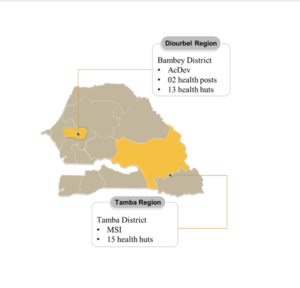 The pilot phase is executed in collaboration with a local implementing partner ACDEV for the District of Bambey and an international implementing partner Marie Stopes International for the District of Tambacounda.
The District of Bambey (Diourbel) is located in the Centre of the country. The pilot covers 15 health huts belonging to 2 health posts with a target population of 16,000 women on reproductive age (WRA).
The District of Tambacounda is located in the southeast with a pilot phase covering 15 health huts in 15 health posts with a target population of 48,000 WRA.
The scope of the pilot includes:
- Decentralized provision of family planning services in health facilities and community sites.
- Itinerant midwives and mobile teams, referring to the district, are deployed in health huts and community sites based on a monthly plan to offer the MNCH/FP package.
- Teams of two (02) to four (04) midwives and a social marketing agent work with relays and district health workers to mobilize the community.
Preliminary Results
Significant progress has been made so far.
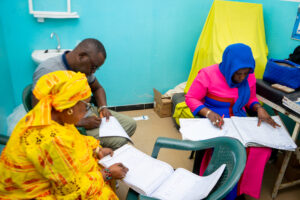
Near 50 community actors and 17 midwives are trained to provide reproductive, maternal, newborn, child, and nutrition (RMNCH-Nut) and family planning services in Bambey and Tambacounda. These trainings aim to enhance the quality of care for mothers and children and strengthen family planning services.
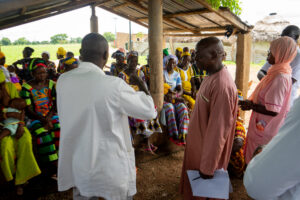
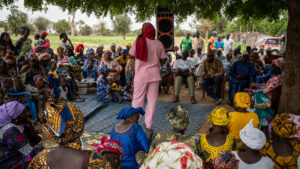
Awareness-raising and health promotion sessions, conducted through community meetings led by trained actors, reached 1,272 people in Tambacounda and 25,600 in Bambey. This community engagement is essential for fostering the adoption of primary healthcare services and improving access to maternal and child healthcare.
The services provided by community health workers allowed to achieve the below preliminary results:
- Near 1,000 households were visited for consultations and awareness raising on RMNCH, nutrition, hygiene and non-communicable diseases
- 517 family planning patients served, with 28 % new users.
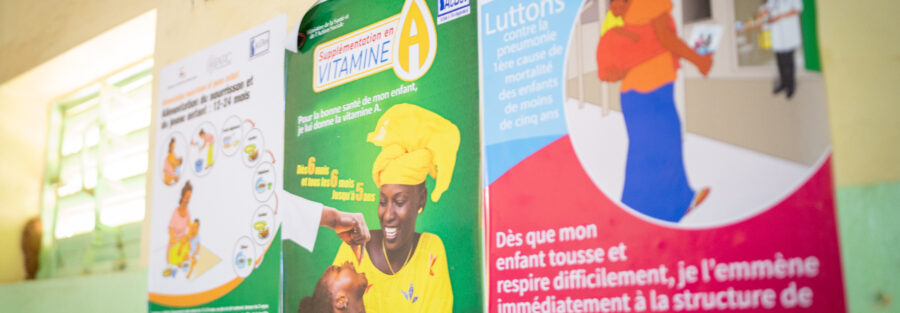
- Near 3,000 children aged under 5 were treated for pneumonia and diarrhea, supplemented with Vitamin A, and dewormed.
- 16 RMNCH promotion sessions were held, including 592 attendees (91% women)
Key Learnings and Challenges
A midterm review of the pilot phase was conducted under the supervision of MSAS, with the participation of DSME, ACDev and MSI.
This review highlighted both achievements and challenges within the districts of Bambey and Tambacounda.
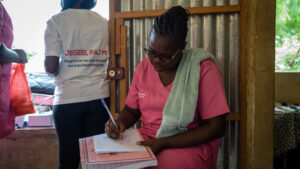
Globally, health workers showed strong commitment, and consultation registers were kept up-to-date in the health posts visited. However, gaps in data management were noted, particularly regarding the recruitment of family planning agents and stock management of essential medicines.
The supervision mission also identified issues related to irregular medicine supply, especially for critical medications like ACT (for treating malaria in adults and children) and Fer/Folic Acid supplements, which were often unavailable.
Key recommendations from this review include improving data management practices, ensuring a continuous supply of essential medicines, and enhancing community engagement in family planning.
Additionally, better stock management systems and comprehensive training for community health workers, especially midwives, are crucial to improving maternal and child health services.
Conclusion and Next Steps
Despite the challenges, the pilot project shows promising results for the future of maternal and child health in Bambey and Tambacounda. Through coordinated efforts of local health authorities, partners like ARC, and community actors, significant improvements are being made in managing health services at the local level.
A feedback meeting concluded the supervision visit, bringing together the Regional Health Directors and key project stakeholders.
These discussions highlighted the positive impact of the pilot project while identifying areas for further improvement.
Moving forward, the focus will be on optimizing medicine management, strengthening training for healthcare providers, and continuing community outreach to ensure the success of this innovative project for maternal and child health in Senegal.
Yacine Fatime Ndao – Senegal Country Lead