Background of Antiretroviral (ARV) Distribution and Challenges.
Kenya is estimated to have 1,356,806 people living with HIV (PLHIV) and there are approximately 22,000 new cases of infection every year. Currently, most of the ARV distribution to PLHIVs is through public health facilities.
However, the rising number of new cases every year adds an additional 2000 PLHIVs to the already strained public health systems. This poses challenges for both the Recipients of Care (RoCs) and the public health system.
“Most health facilities function from Monday to Friday between 8 am and 4:30 pm. Sometimes they close after 3:30 pm. So, when can we access the services?” – Community Network, July 11, 2024. Another Community Network noted, “The CCCs are crowded. This was an issue during Covid. We are exposed to communicable diseases in crowded places.”
To ensure continuity in the provision of health services to all PLHIV, and maintain the quality of services, it is essential to decongest the public health system and expand the services currently provided by the Comprehensive Care Centres (CCC).
The Community Pharmacy Model (CPM) of DSD
The Ministry of Health, through NASCOP, is aiming to leverage the capacity of private community pharmacies to enhance access to HIV care services by expanding on differentiated Service delivery models. In this CPM model, the community pharmacies linked with a health facility will collect the ARV refills and distribute them to established RoCs. The community pharmacy’s role is not limited to merely distributing the drug refills, but the RoCs will also have their vitals taken every month by a trained pharmacist, ensuring continuity in treatment reporting.
“It is not about shifting the burden [from the public health system] to community pharmacies. This is more about filtering and also to ensure that no burden is created within the community pharmacies.” – Maureen Inimah
The CPM is a client-centered model that reduces the hurdles for established RoCs in obtaining ARVs monthly by giving them a choice to collect the ARV refills from a community pharmacy of their choice at a convenient time. This reduces unnecessary burden on the public health system, simplifies life for established RoCs, and increases their efficiencies by reducing the costs and wait time associated with healthcare.
In a recent sensitization meeting jointly conducted by NASCOP and ARC, a community partner upon learning about the CPM in detail noted, “I am going to talk to my neighbors about this model. This is the best model for working women. We can avoid the long lines in the health facilities.” In a similar spirit, another community partner expressed faith in this model and said “This is the best model for men. We can just go to the facility and pick up the medicine.”
The successful rollout of CPM also paves the way for exploring pathways to integrate AIDS care with overall healthcare delivery. On the matter of integration, a senior community partner noted, “For aging and other patients, we need to think about integration. We need to internalize it. I know it will not happen overnight. . . it is a process. But can we also be able to pick up hypertension and diabetes medicines from the pharmacy? I would like to pass on this information to my peers.”
Operationalizing the Pilot
To operationalize and roll out the pilot CPM, the Africa Resource Centre (ARC) is partnering with MoH through NASCOP. ARC’s technical expertise with respect to operationalizing the CPM includes
- Awareness generation, sensitization, and interest assessment of all stakeholders including County officials, implementing partners, community networks, and RoCs.
- Finalization of service-level agreements and SOPs with relevant stakeholders.
- Advisory services on defining roles and responsibilities of parties involved.
- Advisory on the preparation of MoUs between Community Pharmacies and Counties.
- Designing a feedback mechanism to record reported concerns and complaints
Partnerships and Rollout of Pilot
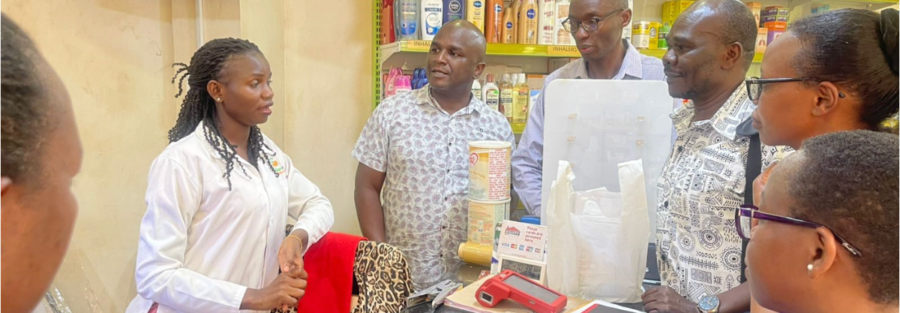
Five counties were selected to pilot the CPM, namely Nairobi, Mombasa, Kisumu, Nakuru, and Kiambu. The first step was the expression of interest by community pharmacies and a total of 87 community pharmacies expressed interest. The next step is the critical stage of readiness assessment of willing community pharmacies. This assessment was pivotal to ensuring the confidentiality and security of patient data, interoperability of services between public health facilities and private pharmacies, and RoC’s faith in the CPM.
The readiness assessment of the 84 community pharmacies on 6 key metrics including regulatory requirements, the sufficiency of essential infrastructure, compliance with security measures, and preparedness of pharmacists indicated that most pharmacies meet the standards and are ready for the rollout of the pilot.
Next Steps
The readiness assessment has paved the way for ARC to support NASCOP in capacity building of stakeholders, finalization of MoUs between counties and community pharmacies, and support in pilot rollout and testing. Upon successful rollout of the pilot, ARC will support NASCOPs efforts in incorporating the feedback from all stakeholders received during the pilot.
Thus far, stakeholders have expressed a lot of faith in the new model.
“We welcome this model and we are aware of it fully. We will support the pilot. We will help with coordination, demand creation, capacity building, and make it ready for scale up, because we are sure it is going to succeed.” – Community Network, Kisumu
Author: Douglas Onyancha